Few things make people tense up in the dental chair quite like a tray of cold putty pressed against their teeth.
For a lot of patients, that discomfort sits on top of nerves that were already there. The 2009 Adult Dental Health Survey, the largest of its kind in the UK, found that over a third of adults (36%) had moderate dental anxiety, while 12% had extreme anxiety.
Against that backdrop, it makes sense that so many practices now offer a digital dental scan instead. A systematic review published in the European Journal of Orthodontics pooled nine studies, and every one of them found some benefit for intraoral scanning over conventional techniques, with patients reporting more positive experiences around smell, taste, sound, vibration and nausea.
A UK trial with orthodontic patients came to a similar conclusion: participants found the digital scan significantly more comfortable than tooth moulds.
The process itself is simpler than many people expect. A slim wand takes the place of the impression tray, the scanner uses light rather than radiation, and most scans take only a few minutes per arch. It does have limits, though. It records the surfaces of your teeth rather than what lies beneath them, and the finished file becomes part of your dental records.
Each of these points is covered below, starting with why dental impressions have changed at all.
Why Dental Impressions Are Going Digital
For decades, a dental impression meant biting into a tray of alginate or silicone and waiting for it to set. The method works, but the material feels bulky, the taste lingers and a strong gag reflex can make the whole thing a struggle. If the mould tears or traps an air bubble, it usually has to be taken again from scratch.
Digital dental impressions take a different approach entirely. In London, UCLH’s digital dentistry programme replaced traditional impressions with intraoral scanners that capture images of patients’ teeth and gums, and high street practices have been moving the same way.
| Traditional Mould | Digital Dental Scan | |
| What goes in your mouth | A tray filled with impression material | A slim handheld wand |
| Taste and texture | Thick paste that some find unpleasant | Nothing to taste or swallow |
| If something goes wrong | The whole impression is usually retaken | Only the missing area is rescanned |
| Getting it to the lab | Posted or couriered | Sent digitally |
| What you can see | Nothing until the model is made | A 3D model on screen straight away |
Moulds haven’t disappeared, though. One recent systematic review found that digital impressions and conventional moulds are both generally clinically acceptable, although conventional impressions performed better in full arch cases.
If your dentist chooses putty for a particular job, that’s a clinical judgement rather than an outdated habit.
How an Intraoral Scanner Builds a 3D Model of Your Mouth
An intraoral scanner is a handheld wand with a small camera in its tip, linked to a computer. It shines light onto the teeth and uses the reflections to produce a digital impression. As the wand glides along, it captures multiple frames every second, and the software stitches them together into a three-dimensional model of the mouth.
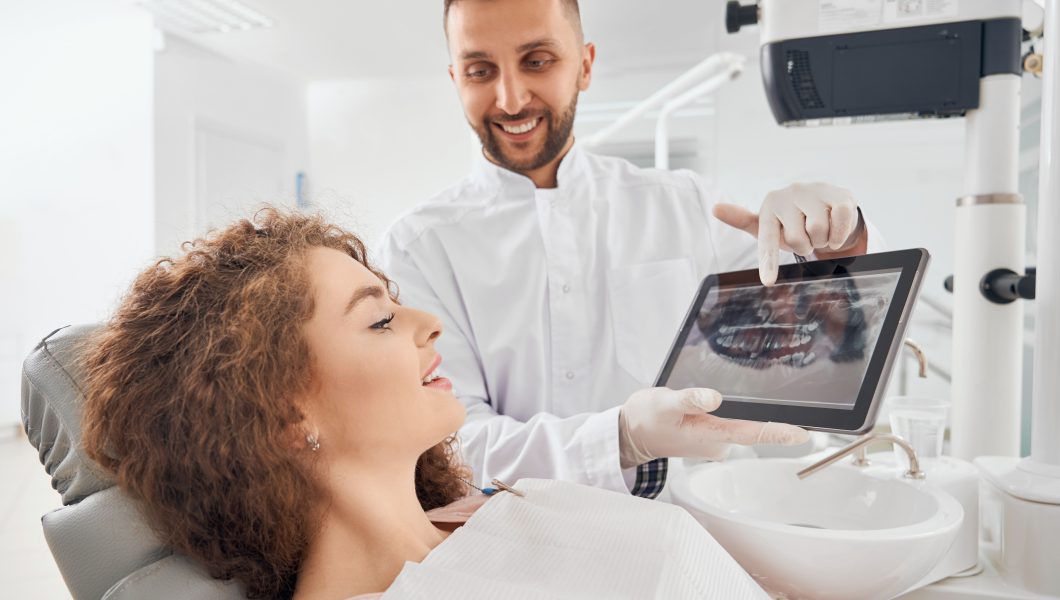
Because the process relies on light rather than radiation, it’s considered very safe. The model usually builds on a screen as you go, and the 3D image can be viewed with the patient to discuss treatment options. Watching your own teeth appear in fine detail is often the moment people relax.
How to Prepare for Your First Digital Dental Scan
Not every practice has a scanner yet, whether NHS or private. If you’d prefer one, ask when you book. Beyond that, preparation is simple:
- Brush and floss beforehand: Clean teeth give the scanner a clearer view, as food debris and plaque can show up on the model.
- Mention a sensitive gag reflex: Telling the team early means they can scan in short sections and pause when you need.
- Flag jaw pain or clicking: Keeping your mouth open for several minutes can tire a sensitive jaw, so ask for breaks.
- Agree on a stop signal: Raising a hand is a simple way to ask for a pause without trying to talk around the wand, and knowing you’re in control can ease dental anxiety.
- Eat before crown appointments: If the scan follows tooth preparation under local anaesthetic, you may be numb for a while afterwards.
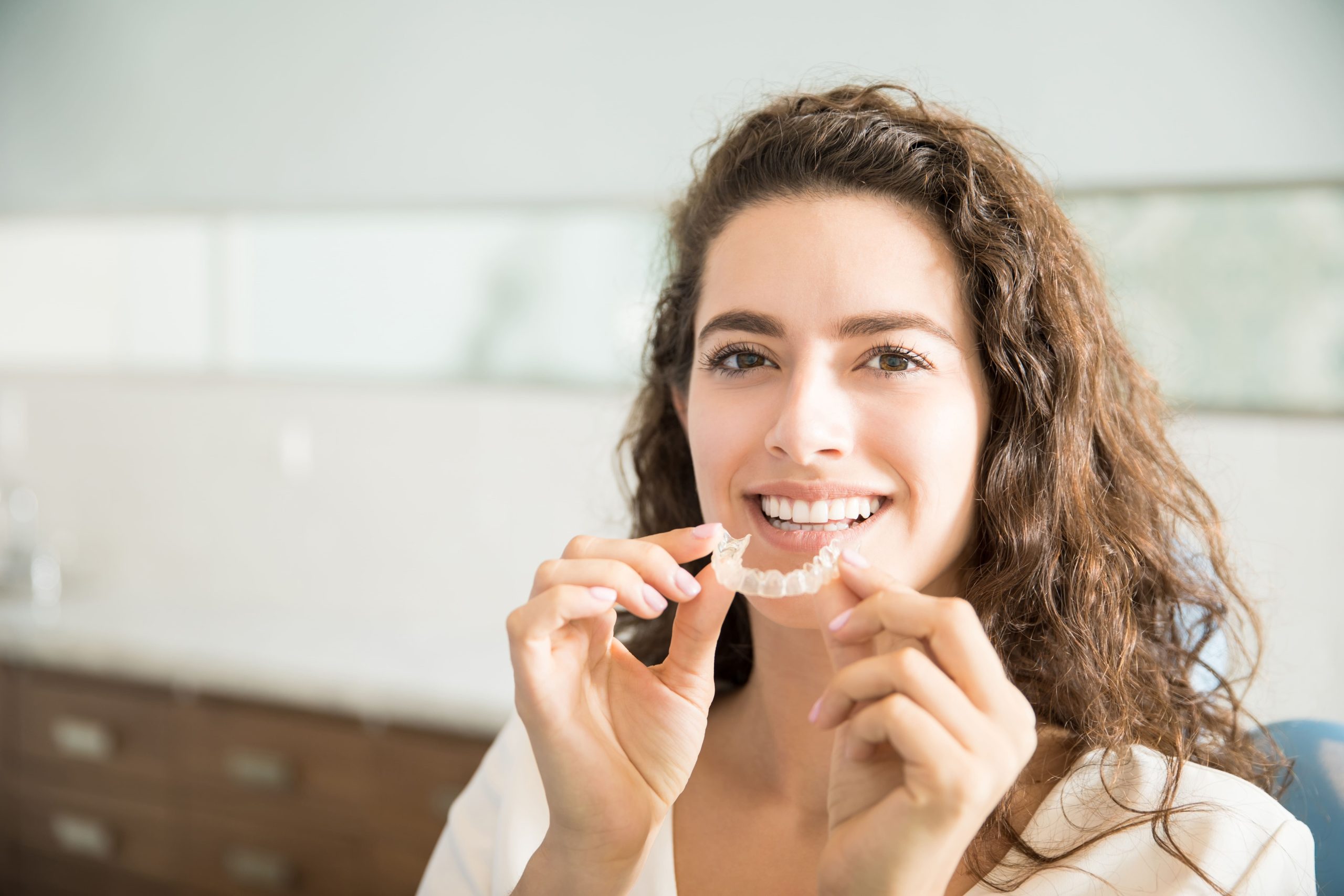
- Ask what the scan is for: Knowing whether it’s for dental crowns, clear aligners or a retainer helps you understand the next steps.
What Happens During a Digital Dental Scan, Step by Step
A digital dental scan usually follows the same five stages, from drying your teeth to reviewing the finished model on screen.
1. Cleaning and Drying
Your dentist will make sure your teeth are clean and dry, usually with a gentle puff of air. Saliva can blur the images, so this step matters more than it seems.
2. Scanning the Upper and Lower Arches
The wand moves slowly over your top teeth and then your bottom teeth. It covers the biting surfaces, the sides and the gum line, and your cheek or tongue may be held aside gently. If you have a sensitive gag reflex, the team can scan the back teeth in short bursts.
3. Recording Your Bite
You’ll be asked to close your teeth together. This lets the scanner capture how your upper and lower teeth meet, which is vital for anything that needs to fit comfortably when you chew.
4. Filling the Gaps
The software highlights any patches it missed. Instead of starting over, the clinician simply passes the wand over those areas again.
5. Reviewing the Model Together
Once your 3D dental scan is complete, your dentist can rotate and zoom the model to show you worn edges, gaps or crowding. This is a good moment to ask questions.
What a 3D Dental Scan Can and Can’t Show
A 3D dental scan records the visible surfaces of your teeth and gums in fine detail. It’s useful for planning orthodontic treatment, creating digital models for implants and monitoring oral health over time.
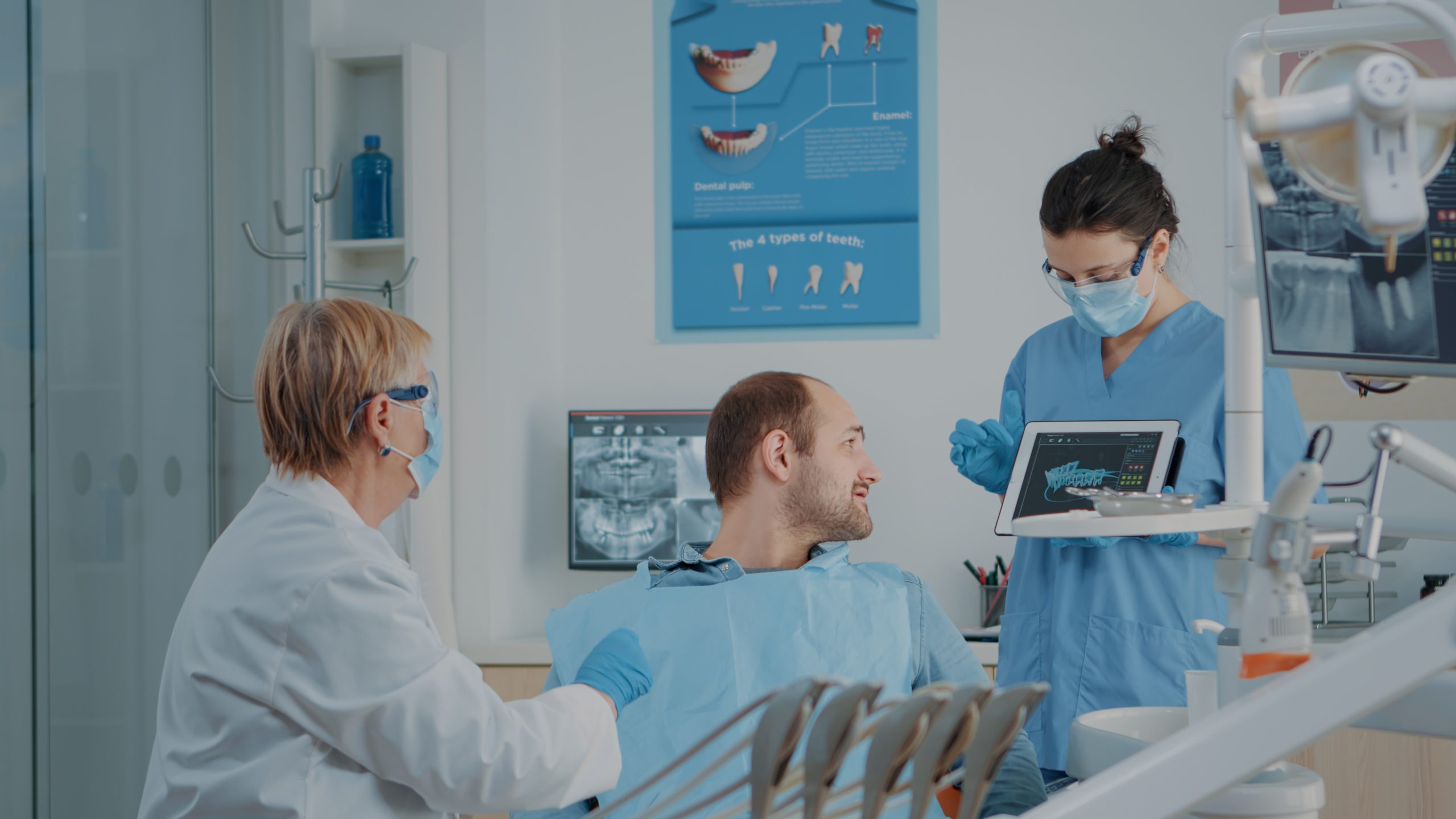
What it can’t do is see inside a tooth or below the gum line. Hidden decay, root problems and bone levels still need radiographs, the images most people know as X-rays. Don’t be surprised if your dentist takes those separately.
After Your Scan: Aftercare, Data and Next Steps
There’s no recovery time, so you can eat, drink and carry on with your day straight away. The only exception is a scan taken after tooth preparation under local anaesthetic. In that case, wait until the numbness wears off before eating or having hot drinks.
At hospitals such as UCLH, digital impressions are uploaded securely to the cloud so the lab can view them immediately. From there, technicians design your crown, aligners, retainer or night guard. Your dentist will tell you when to expect it back.
Your digital dental scan also becomes part of your dental records, which are protected under UK GDPR, and you have the right to ask your practice for a copy. That can be handy if you change dentists. If your teeth haven’t shifted, a stored scan can sometimes help with a replacement retainer or guard, though your dentist will decide whether a fresh scan is needed.
Feeling Ready for Your Scan
A digital dental scan is one of the more comfortable parts of modern dental care, especially if you live with dental anxiety. It swaps putty for light, shows you your own mouth on screen and sends your file straight to the people making your treatment. Arrive with clean teeth, mention anything that worries you and ask questions as the model appears. Before your appointment, jot down what you’d like to know, so nothing slips your mind once you’re in the chair.


No Comments