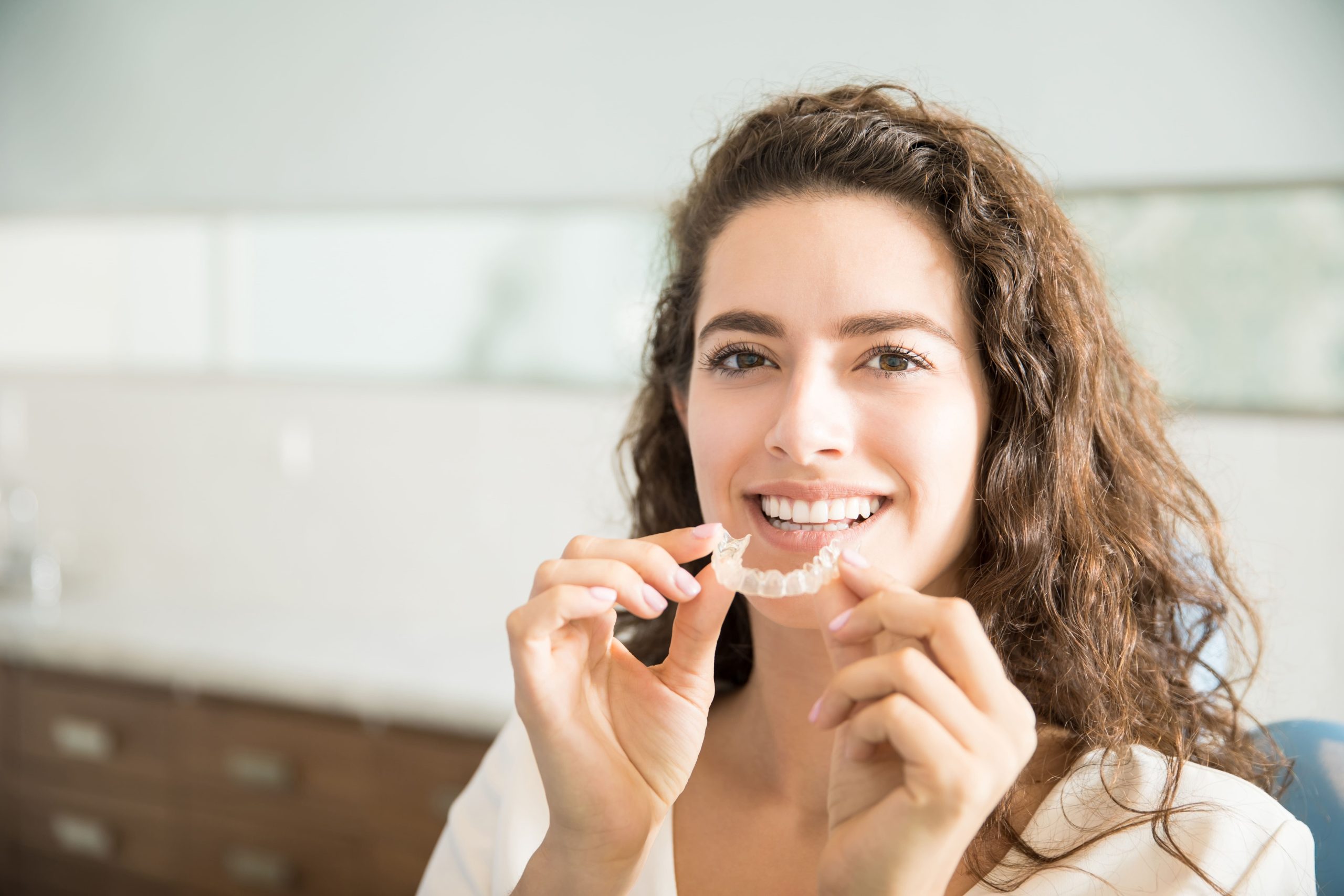
Starting orthodontic treatment is a big step, and it’s completely normal to rethink your options along the way. Many patients begin with traditional braces and later become curious about clear aligners due to their comfort, appearance, and flexibility. This leads to a very common question: Can you switch from braces to aligners mid-treatment?
The short answer is yes, but only in specific cases. The decision is highly individual and depends on your dental progress, treatment complexity, and professional evaluation. Let’s explore this in detail so you understand when switching is possible, when it is not, and what it means for your smile journey.
Understanding Braces and Aligners: Why Treatment Starts Differently
Before discussing switching, it helps to understand why orthodontists choose braces or aligners in the first place.
Traditional Braces
Braces use metal or ceramic brackets attached to teeth, connected by wires that apply continuous pressure. They are highly effective for:
- Severe crowding
- Complex bite issues (overbite, underbite, crossbite)
- Rotated or misaligned teeth
- Cases requiring precise control of movement
Because braces are fixed, they work 24/7 without relying on patient compliance.
Clear Aligners
Clear aligners (such as Invisalign-type systems) are removable plastic trays that gradually shift teeth into position. They are best for:
- Mild to moderate alignment issues
- Cosmetic corrections
- Patients who can commit to wearing them consistently
- Refinement stages after major corrections
Aligners rely heavily on discipline since they must be worn 20–22 hours per day.
So, Can You Switch Midway? The Real Answer
Yes, switching from braces to aligners mid-treatment is possible, but it is not routine or automatic. Orthodontic treatment is like a carefully designed roadmap—changing direction mid-way requires recalculation.
Your orthodontist will evaluate whether:
- Your teeth have already moved into a stage suitable for aligners
- The remaining movements are simple enough for aligner technology
- Your bite can be maintained or improved without braces
In many cases, switching happens during the mid-to-late phase of treatment, when major corrections are already complete.
Situations Where Switching Is More Likely
You may be a good candidate for switching if:
1. You Have Completed Major Alignment
If braces have already corrected crowding or spacing, aligners may be used to refine and fine-tune the smile.
2. Only Minor Adjustments Remain
Small gaps, slight rotations, or final bite polishing can often be handled with aligners.
3. You Want Improved Aesthetics During Final Stages
Many adults switch for cosmetic reasons when the treatment becomes less complex.
4. Your Orthodontist Uses a Hybrid Approach
Some treatment plans are designed to combine both systems from the beginning.
When Switching Is NOT a Good Idea
Despite the appeal of aligners, there are situations where switching can actually slow progress or compromise results.
1. Severe Bite Corrections Are Still Needed
Aligners may not provide enough force or control for complex bite adjustments.
2. Teeth Are Still Actively Moving in Multiple Directions
Braces are better at controlling vertical, rotational, and root movements simultaneously.
3. Patient Compliance Is a Concern
If there’s a risk of not wearing aligners consistently, treatment results may suffer.
4. Early Treatment Phase
Switching too early can reset progress or significantly extend treatment time.
The Clinical Process of Switching From Braces to Aligners
If your orthodontist approves the transition, the process is carefully planned to avoid setbacks.
Step 1: Detailed Re-Evaluation
Your orthodontist reviews your progress using X-rays, scans, and bite analysis to determine if aligners can take over.
Step 2: Removal of Braces
Braces are safely removed, and your teeth are cleaned and polished.
Step 3: Digital Scanning or Impressions
A 3D scan captures your current tooth position to design a new aligner plan.
Step 4: Custom Treatment Planning
Advanced software maps out the remaining tooth movements in stages.
Step 5: Aligner Fabrication
A series of custom trays is created, each slightly adjusting tooth position.
Step 6: Transition Phase
You begin wearing aligners, typically switching trays every 1–2 weeks as directed.
Benefits of Switching From Braces to Aligners
When done at the right time, switching can offer meaningful advantages:
Improved Comfort
No wires or brackets means less irritation to cheeks and gums.
Better Appearance
Clear aligners are nearly invisible, making them ideal for professional or social settings.
Easier Cleaning
You can remove aligners while brushing and flossing, improving oral hygiene.
Lifestyle Freedom
No food restrictions compared to braces, which require avoiding sticky or hard foods.
Psychological Boost
Many patients feel more confident wearing aligners in the final stage of treatment.
Possible Downsides You Should Know
Switching is not always perfect, and there are important considerations:
- Additional cost for the new aligner system
- Possible extension of treatment duration
- Need for strict discipline in wearing aligners
- Occasional need for “refinement” aligners at the end
- Risk of minor tracking issues if not worn properly
These factors are why orthodontists do not recommend switching unless it truly benefits the outcome.
Orthodontist’s Perspective: What They Usually Recommend
Most orthodontists prioritise treatment efficiency and long-term stability over convenience. That means:
- If braces are working well, they may recommend continuing
- If aligners can safely complete the job, a switch may be approved
- In many cases, a combination approach is used for the best results
The ultimate goal is not just straight teeth, but a stable bite that lasts for years.
Is Switching Worth It?
Switching from braces to aligners mid-treatment is absolutely possible—but only when carefully planned. It is not a lifestyle decision alone; it is a clinical decision based on how your teeth have responded so far.
If your treatment is already progressing well and only fine adjustments remain, aligners can be a comfortable and aesthetically pleasing finishing option. However, if your case still requires significant movement or bite correction, braces remain the more reliable tool.
The best decision is always made with your orthodontist after a full assessment—not based on convenience alone.
A straighter smile is the goal, but a stable, healthy, and long-lasting result is what truly matters.




No Comments